CRPA Anti-Jamming Antennas How They Defeat GPS Spoofing
CRPA Anti-Jamming Antennas: How They Defeat GPS Spoofing
GPS is the invisible backbone of modern navigation. From the smartphone in your pocket to the drones patrolling our skies, we rely on Global Navigation Satellite Systems (GNSS) to know exactly where we are. But there's a catch: GPS signals traveling from space are incredibly weak by the time they reach Earth. This makes them highly vulnerable to interference, intentional jamming, and deceptive spoofing. Enter the CRPA (Controlled Reception Pattern Antenna)—the gold standard in anti-jamming technology.
What Exactly is a CRPA?
A standard GPS antenna is omnidirectional, meaning it happily listens to signals coming from all directions equally. If a loud, malicious jamming signal is broadcast nearby, it easily drowns out the quiet whisper of legitimate GPS satellites, causing the receiver to lose its fix.
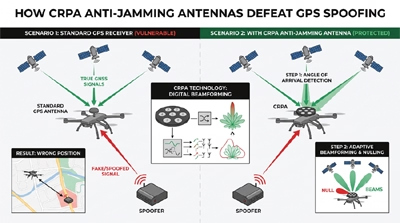
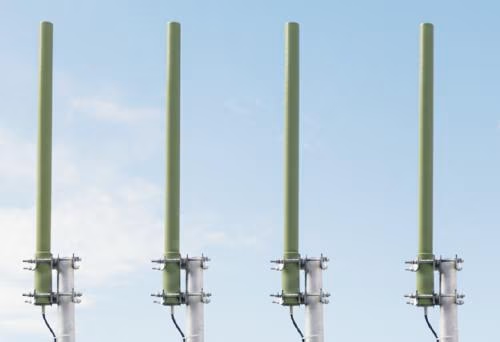
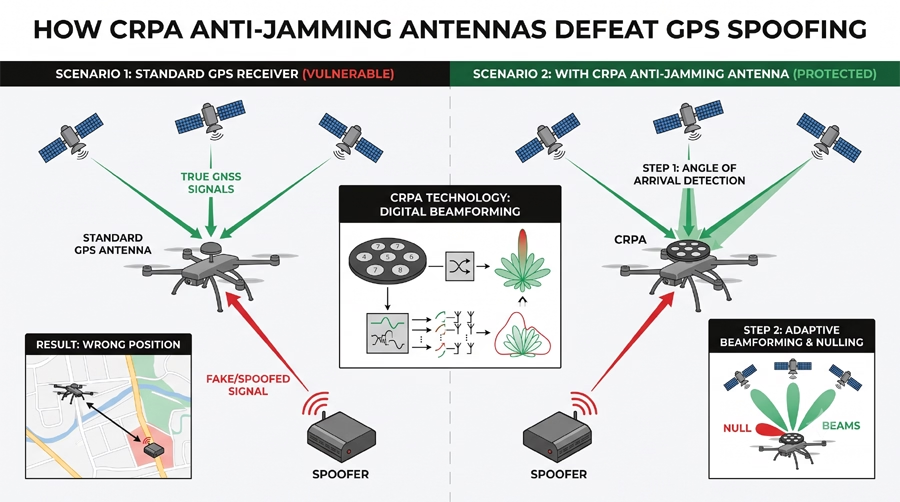
A CRPA is fundamentally different. Instead of a single antenna element, a CRPA is a compact array of multiple antenna elements (often 4 to 8, or more) connected to a sophisticated digital signal processing unit. This array doesn't just passively listen; it actively shapes its own "hearing" pattern in three-dimensional space.
How Does It Work?
CRPA technology relies on two primary signal-processing superpowers to filter out the noise and capture the truth:
- Null Steering (The Mute Button): When the CRPA detects a high-power jamming signal, its built-in algorithms instantly calculate the exact direction the interference is coming from. It then electronically creates a spatial "null"—a localized blind spot—in that specific direction. Think of it like putting your hand up to block a blinding spotlight so you can keep your eyes on the road.
- Adaptive Beamforming (The Megaphone): While ignoring the jammer, the antenna array combines the signals from its multiple elements to increase the gain (sensitivity) in the direction of the genuine GPS satellites overhead.
Because a CRPA has multiple elements, it can project several nulls simultaneously, allowing it to defeat multiple jammers attacking from different angles at the same time.
Why Does It Matter?
As electronic warfare tactics become cheaper and more accessible, GPS interference is no longer just a battlefield problem—it's a critical infrastructure risk. Here is why CRPA technology matters today:
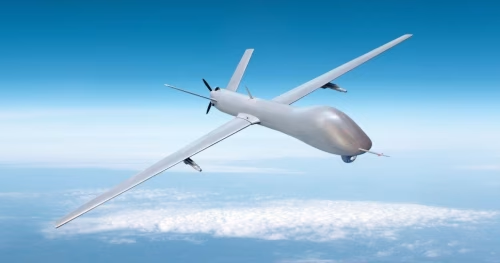
- Protecting Unmanned Systems: Drones (UAVs) and autonomous vehicles rely entirely on uninterrupted GNSS data to navigate. A jammed signal can cause a drone to drift off course or crash. CRPAs ensure mission continuity even in hostile electronic environments.
- Defeating Spoofing: Spoofing is a more insidious threat where a transmitter sends fake GPS coordinates to hijack a vehicle's navigation system. CRPAs can identify that all the satellite signals are suddenly arriving from one terrestrial direction (the spoofer) and nullify them, rather than accepting the fake location.
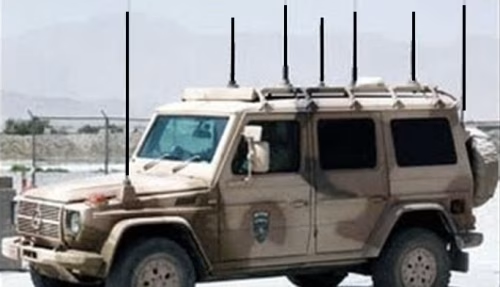
- Securing Defense Platforms: Military aviation, naval vessels, and ground convoys operate in highly contested zones. CRPAs allow these platforms to maintain targeting, positioning, and timing when adversaries try to black out the digital map.
- Safeguarding Civilian Infrastructure: The precise timing data from GPS synchronizes global cellular networks, power grids, and financial markets. As jamming technology proliferates, commercial sectors are increasingly adopting CRPA solutions to prevent catastrophic outages and ensure reliable operations.
In a world heavily dependent on precise location and timing data, standard antennas are no longer enough for critical systems. The CRPA acts as an intelligent, invisible shield—ensuring that the signals we need cut through the noise we don't.